

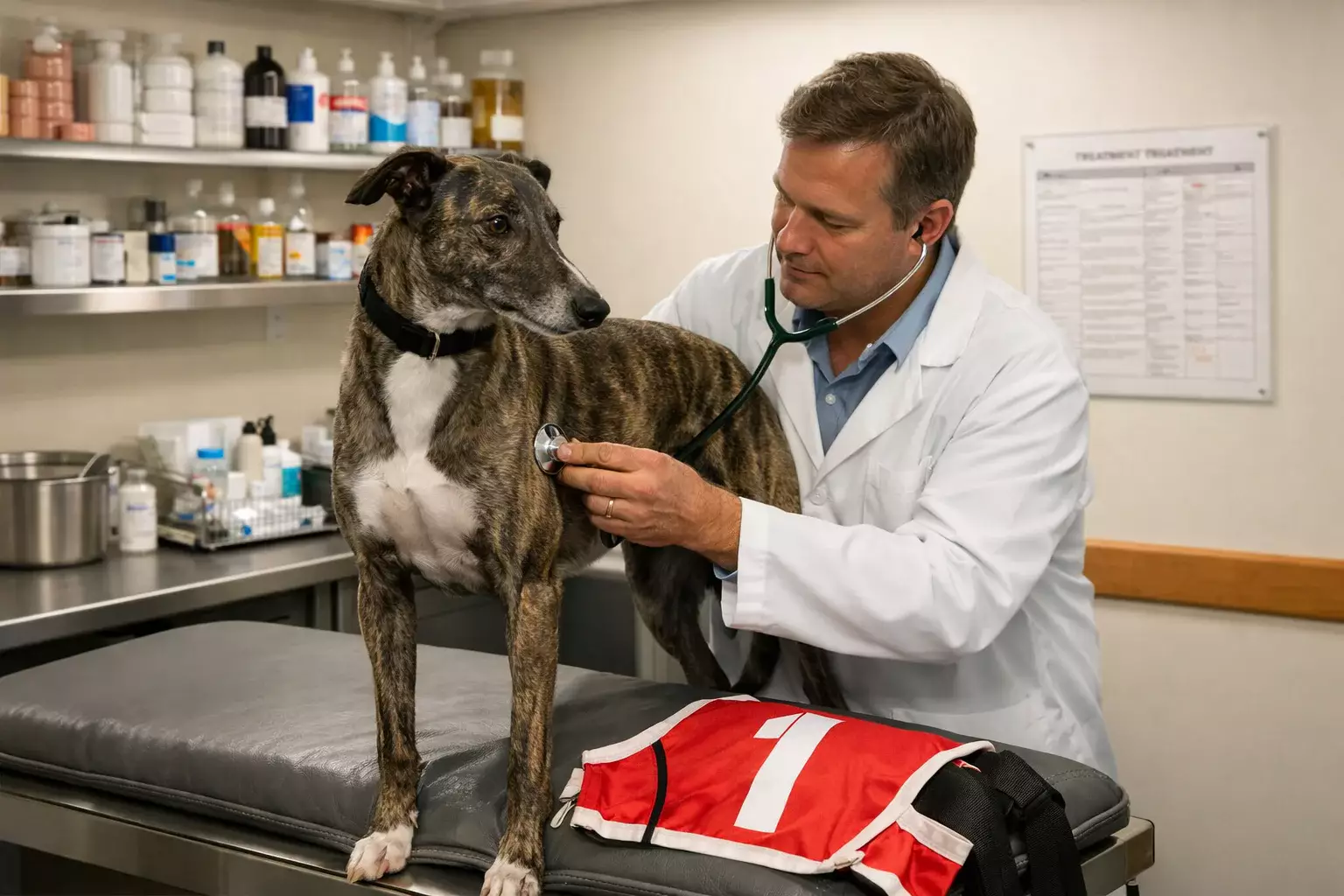
UK Greyhound Welfare in 2024: A Record Year in Data
Greyhound racing in Britain publishes more welfare data than almost any other animal sport in the country. That is partly by choice and partly by necessity — the sport operates under scrutiny from animal welfare organisations, politicians, and a public that increasingly expects transparency about what happens to the dogs. The 2024 data release from the Greyhound Board of Great Britain, covering all racing activity at GBGB-licensed stadiums including Monmore Green, represents the most comprehensive annual snapshot available. The numbers are, by the industry’s own measures, the best it has ever recorded.
What follows is not a defence or a prosecution. It is a reading of the data as published, placed in the context of what those numbers mean for anyone following greyhound results at Monmore or any other UK track. The welfare framework does not sit apart from the racing product. It shapes it — from the veterinary checks that happen before and after every race to the retirement pathways that determine what happens when a dog’s racing career ends.
Track Injury Rate: 1.07% and What That Means
The headline figure from the 2024 data is the injury rate: 1.07% of all starts resulted in a recorded injury, the lowest figure since GBGB began publishing this data. In absolute terms, that translates to 3,809 injuries from 355,682 individual starts across all licensed tracks during the year.
Context matters here. An injury in GBGB’s classification includes everything from minor muscle strains that resolve within days to serious fractures that end a racing career. The 1.07% figure encompasses the full spectrum, and the severity breakdown within that number is where the detail lies. Most injuries at the lower end of the scale — pulled muscles, minor cuts, temporary lameness — are treated and the dog returns to racing within weeks. The serious injuries, while less common, are the ones that attract the most public concern and the most scrutiny from welfare campaigners.
For punters reading Monmore results, the injury rate is not an abstract statistic. It manifests directly in the form book. A dog that disappears from the racecard for three weeks and returns at a lower grade has almost certainly been through an injury-and-recovery cycle. The result line does not tell you this. The absence from the card does. Understanding the injury rate helps explain the gaps in a dog’s form record — gaps that might otherwise be misinterpreted as retirement, transfer, or a trainer’s choice to rest a healthy dog.
The downward trend is significant. The injury rate has fallen consistently since GBGB began systematic data collection, reflecting investment in track surfaces, veterinary oversight, and race management practices. GBGB chief executive Mark Bird noted that the welfare initiatives introduced in recent years are now embedded across the sport, and the 2024 figures consolidate the progress made since the baseline year of 2018.
Fatality Rates: The Trend from 2018 to 2024
The fatality rate is the number that generates the most intense debate around greyhound racing. In 2024, the on-track fatality rate was 0.03%, half the 0.06% recorded in 2020. In absolute numbers, 123 greyhounds died as a result of injuries sustained during racing at GBGB-licensed tracks in 2024.
The halving of the fatality rate over four years is the metric that GBGB highlights most prominently, and it represents a genuine reduction in the most severe outcome a racing greyhound can face. The number is still not zero, and critics of the sport argue that any non-zero fatality rate is unacceptable in a recreational activity. The industry’s position is that the trend demonstrates the effectiveness of welfare interventions and that the goal is continued reduction rather than immediate elimination, which it considers operationally impossible in a sport involving animals running at speed.
The cumulative picture over the full data window — 2018 to 2024 — adds a harder edge to the numbers. Over those seven years, more than 4,000 greyhounds have died and more than 35,000 injuries have been recorded across licensed racing in the UK. These aggregate figures, compiled by campaigners and referenced in Senedd research briefings, are the ones that feature in legislative debates like the Welsh ban bill. They represent a different reading of the same data set: not a story of improvement, but a story of accumulated harm.
Both readings are mathematically accurate. The annual rate is falling. The cumulative toll is substantial. Where you place the emphasis depends on the question you are asking. For a punter reading Monmore results, the practical takeaway is that fatalities, while rare, do occur, and they affect the form book in ways that are not always visible — the sudden absence of a dog from the card, a trainer’s string depleted by an event that never appears in the result line.
Retirement Outcomes: 94% Successfully Rehomed or Retained
Retirement data is the third pillar of the GBGB welfare release, and it has shown the most dramatic improvement since tracking began. In 2024, 94% of greyhounds leaving the racing population were classified as successfully retired — either rehomed through an approved homing centre, retained by their owner as a pet, or transferred to a private home. In 2018, that figure was 88%.
The most striking sub-statistic is the collapse in economic euthanasia — dogs put down because rehoming was deemed too costly or impractical. In 2018, 175 dogs were euthanised for economic reasons. In 2024, the number was three. The near-elimination of economic euthanasia is the clearest evidence that the sport’s retirement infrastructure has changed fundamentally over the past six years, driven by the Greyhound Retirement Scheme, homing centre partnerships, and public pressure that made the old practice politically untenable.
For Monmore specifically, the retirement pipeline involves the Greyhound Trust’s regional branches and other approved rehoming organisations that operate in the West Midlands. Dogs that finish their racing careers at the track are assessed, processed through the retirement scheme, and placed with families or retained by their owners. The process is not always rapid — some dogs take weeks or months to find a home, depending on temperament and health — but the system is structured in a way that was absent a decade ago.
Injury Recovery Scheme and Greyhound Retirement Scheme
Two specific schemes underpin the welfare data improvements. The Injury Recovery Scheme, established in December 2018, provides funding for veterinary treatment of career-ending orthopaedic injuries sustained on track. Since its launch, the scheme has distributed nearly £1.5 million in veterinary payments. The practical effect is that dogs which would previously have been euthanised after a serious fracture are now treated, rehabilitated, and retired into homes. The cost is borne collectively by the industry rather than falling on individual trainers, which removes the financial incentive to destroy an injured dog.
The Greyhound Retirement Scheme works differently. It attaches a financial bond — currently £420, raised from £400 in 2025 — to each greyhound that enters an approved homing centre. The bond is jointly funded by GBGB and the dog’s owner, and it provides the homing centre with guaranteed income to cover the costs of assessment, kennelling, and placement. Since the scheme launched in 2020, it has channelled over £5.6 million to homing centres.
Together, these two schemes address the two points in a greyhound’s career where welfare outcomes were historically worst: the moment of serious injury and the moment of retirement. Neither scheme existed before 2018. Their introduction, and the data improvements that have followed, represent the most substantive structural change in British greyhound welfare in the sport’s modern history. The data does not tell a perfect story — 123 fatalities and 3,809 injuries in a single year are not figures that anyone celebrates — but the direction of travel is measurable, and it is the framework within which every Monmore result is produced.
The wider context is set out in our Monmore greyhound results guide.
What happens next for the dogs is in the retirement scheme.
