

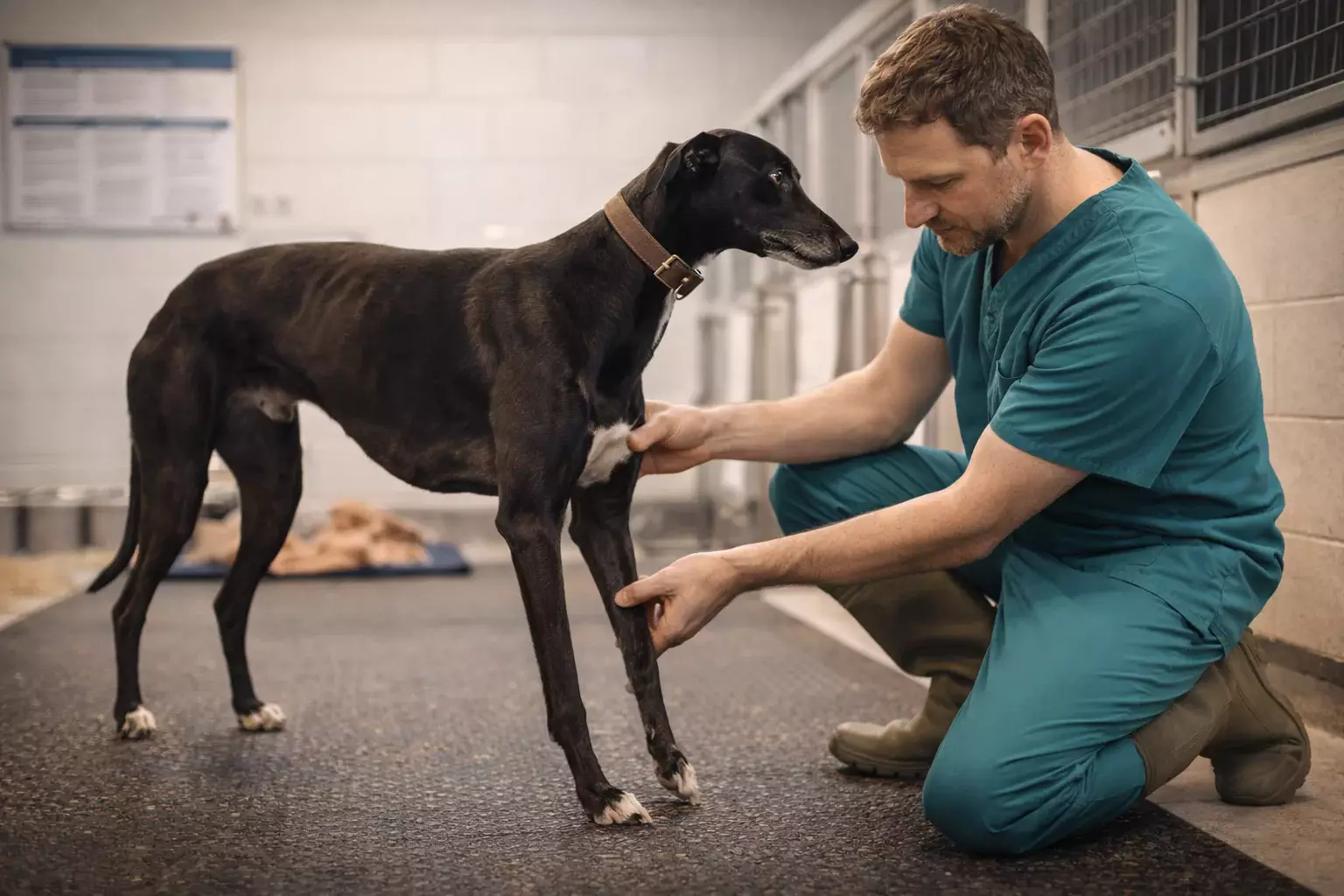
A Welfare Strategy That Goes Beyond the Track
In 2022, the Greyhound Board of Great Britain published a document with an ambitious title: u201cA Good Life for Every Greyhound.u201d It was not a press release or a bullet-point list of aspirations. It was a formal welfare strategy that attempted to codify how racing greyhounds should be cared for across every stage of their lives — from registration and training through active racing to retirement and rehoming. The strategy covers all 18 GBGB-licensed tracks, including Monmore Green, and it represents the most structured welfare framework the sport has ever produced.
For anyone who reads Monmore results and wonders what sits behind the numbers — who checks the dogs before a race, what happens when one pulls up lame, how the kennel conditions are monitored — the welfare strategy is the answer. It is the regulatory architecture that governs the sport’s treatment of its athletes, and understanding its structure helps explain why certain practices exist at the track level. When GBGB’s then-chairman Jeremy Cooper described it as one of the most comprehensive strategies for working-animal welfare ever produced in the country, the claim was not casual. The strategy draws on veterinary science, animal behaviour research, and regulatory models from other animal industries, and its ambition is to set a standard that can be independently verified.
The Five Welfare Domains Applied to Racing Greyhounds
The strategy is built on the Five Domains Model of animal welfare, a framework developed by veterinary scientist David Mellor that has become the international standard for assessing the wellbeing of animals in managed environments. The five domains are: nutrition, physical environment, health, behavioural interactions, and mental state. Each domain is assessed for both positive and negative indicators, which means the framework does not just ask u201cis the animal suffering?u201d but also u201cis the animal experiencing positive states?u201d
Applied to greyhound racing, the five domains translate into specific, auditable standards. Nutrition covers feeding regimes in kennels — the quality of food, the frequency of meals, access to water, and the monitoring of body condition. Physical environment covers kennel size, bedding, temperature, ventilation, and turnout areas where dogs can exercise outside of racing. Health encompasses veterinary oversight, injury treatment protocols, the Injury Recovery Scheme, and the track-side veterinary presence that is mandatory at every GBGB meeting. Behavioural interactions address how dogs are socialised, how they interact with handlers and kennel staff, and whether they have opportunities for play and enrichment beyond the racing routine. Mental state — the most abstract domain — considers whether the overall experience of the dog is positive, drawing on indicators from the other four domains.
For Monmore specifically, the Five Domains framework means that the kennels attached to the track, the veterinary facilities, the track surface maintenance, and the handling practices of contract trainers are all subject to standards derived from this model. GBGB employs regional regulatory veterinarians who inspect tracks and kennels against these standards, and the inspection regime has intensified since the strategy was launched — kennel inspections increased by 73% between the baseline year and the most recent reporting period. The inspections are unannounced, which gives them practical teeth. A trainer who maintains excellent standards on open days but lets them slip during the week will eventually be caught, and the consequences include suspension or revocation of their licence.
2025 Progress Report: Key Achievements
GBGB publishes periodic progress reports against the welfare strategy, and the 2025 update provides the most current snapshot of where the sport stands. The headline metrics are largely positive. The Injury Recovery Scheme has distributed nearly £1.5 million in veterinary payments since its launch in December 2018, funding the treatment of career-ending orthopaedic injuries that would previously have resulted in euthanasia. Kennel inspections have increased substantially, and the proportion of licence holders engaging with continuing professional development programmes has risen — over 580 hours of CPD were delivered in 2024 alone.
The retirement data shows the most dramatic improvement. The successful retirement rate has climbed from 88% in 2018 to 94% in 2024. Economic euthanasia has fallen from 175 dogs to three. These figures are the direct output of the Greyhound Retirement Scheme and the broader cultural shift that the welfare strategy has attempted to drive — a shift from treating retirement as an afterthought to treating it as a core responsibility of the racing industry.
Track safety data also features in the progress report. The injury rate of 1.07% in 2024 is the lowest on record, and the fatality rate of 0.03% represents a halving since 2020. GBGB attributes these improvements to investment in track surfaces, the standardisation of veterinary protocols, and the introduction of mandatory pre-race and post-race examinations at all licensed meetings.
The progress is not without context. Critics point out that even record-low injury rates still translate to thousands of injuries per year in absolute terms, and that the cumulative toll since 2018 — over 4,000 deaths and 35,000 injuries across licensed racing — remains substantial. The welfare strategy does not dispute these numbers. It frames them as evidence that more work is needed, not that the job is done.
The Funding Question: Voluntary Levy vs Statutory Levy
The welfare strategy’s ambitions are constrained by a fundamental financial question: who pays? Currently, greyhound racing welfare in the UK is funded through a voluntary levy — bookmakers contribute a percentage of their greyhound betting profits to the British Greyhound Racing Fund. The current rate is approximately 0.6% of gross profits. That voluntary contribution generated £7.3 million in the 2023-24 financial year, down 4% from £7.6 million the year before. The long-term trend is downward, tracking the broader decline in greyhound betting turnover.
The alternative, long debated in Parliament, is a statutory levy — a legally mandated contribution that bookmakers would be required to pay. During a 2019 Hansard debate, it was calculated that a 1% levy on gross greyhound betting turnover would generate £11.6 million for the sport’s welfare and prize fund infrastructure. A 1.5% levy would generate £17.5 million. Either figure would represent a significant increase on the current voluntary arrangement and would, in theory, provide the funding base needed to fully implement the welfare strategy across all tracks.
The bookmakers resist a statutory levy, arguing that greyhound racing already benefits from their investment through BAGS contracts, SIS broadcasting deals, and media rights payments. The racing industry argues that the voluntary contribution is inadequate and declining, and that the welfare obligations placed on tracks and trainers require a secure funding base that a voluntary arrangement cannot guarantee. The debate has been running for years without resolution, and the welfare strategy’s long-term viability depends, in significant part, on which side prevails.
For Monmore and every other GBGB track, the funding question is not abstract. It determines whether the welfare infrastructure that produces the data in the progress reports can be maintained, expanded, or will gradually erode as voluntary contributions shrink. The strategy document is comprehensive. The science behind it is sound. The missing piece is a revenue model that matches the ambition, and until that piece falls into place, the gap between what the strategy promises and what it can deliver will remain the central tension in British greyhound welfare.
The wider context is set out in our Monmore greyhound results guide.
