

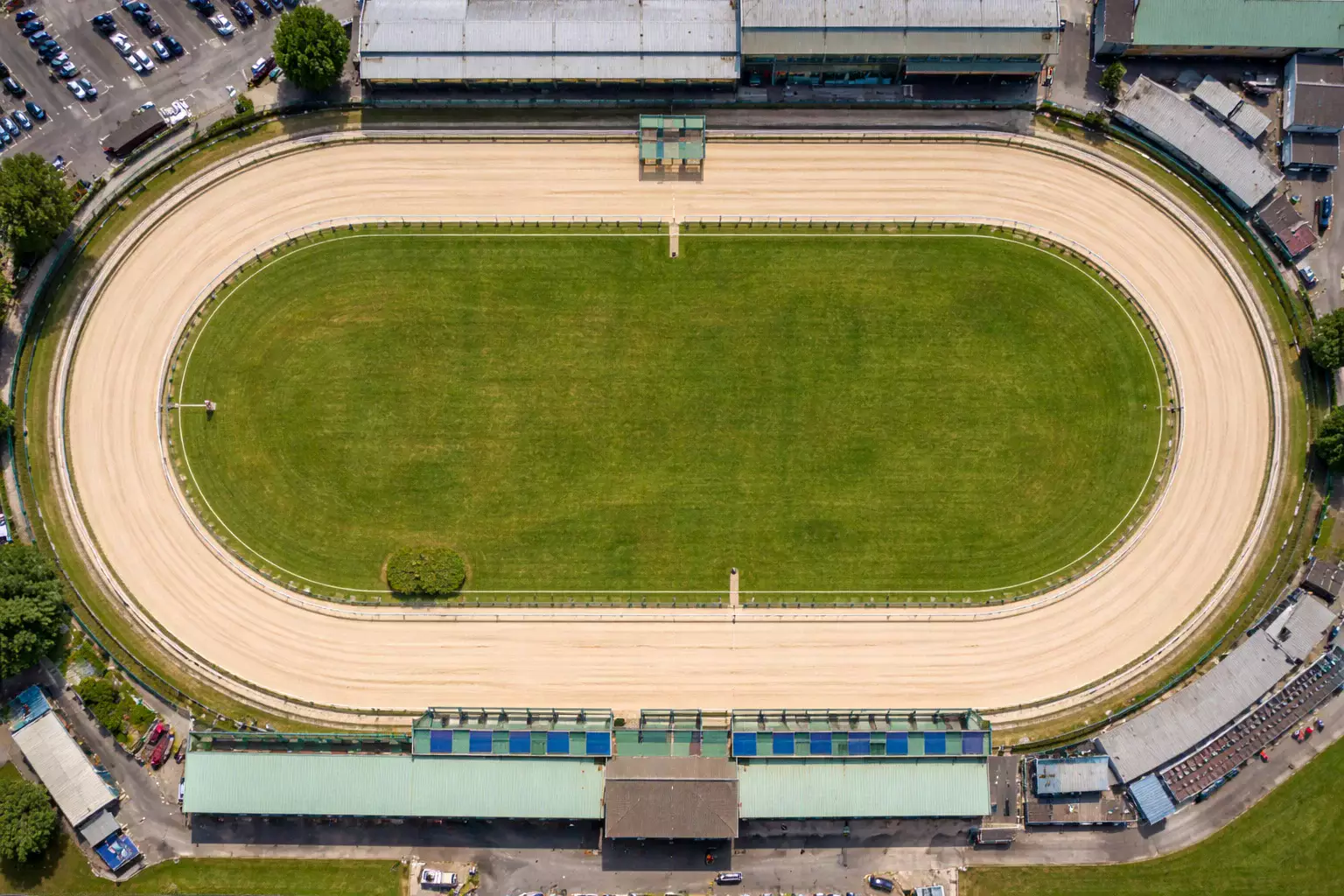
Not All Tracks Are the Same: Why Comparison Matters
A greyhound that clocks 29.10 over 480 metres at Monmore is not the same proposition as a dog running 29.10 over 480 metres at Romford. The time is identical. The context is not. Different tracks have different circuit lengths, different bend configurations, different surfaces, different hare systems, and different first-bend distances — all of which influence the times produced and the way races unfold. Treating all 480 m times as interchangeable is one of the more common analytical errors in greyhound form reading, and it starts with a failure to understand how tracks compare.
The UK currently operates 18 GBGB-licensed greyhound stadiums, down from more than 77 at the sport’s peak. Each of those 18 tracks has its own physical characteristics that shape the racing it produces. Knowing where Monmore sits in that landscape — what makes it similar to some tracks and distinct from others — is essential for anyone trying to compare form across venues or assess whether a dog transferring to Monmore from another track will perform to the same standard.
Circuit Length, First Bend and Hare Type: The Core Variables
Three variables define the fundamental character of a greyhound track: the circuit circumference, the distance from the traps to the first bend, and the type of hare used. These interact to create the racing conditions that produce results, and they are the starting point for any meaningful comparison between venues.
Circuit circumference determines how tight the bends are. A shorter circuit means tighter turns, which favours dogs with balance and agility over those that rely on raw galloping stride. A longer circuit allows dogs to maintain speed through wider arcs, which tends to favour bigger, faster runners. The difference between a 380 m circuit and a 460 m circuit is significant — not just in how the races look but in which dogs win them.
The distance to the first bend is arguably the most important variable for form comparison. A short run to the bend — under 120 metres — puts enormous emphasis on trap speed. A dog that breaks slowly from the boxes will reach the bend behind its rivals and face traffic that costs time and position. A longer run to the bend gives dogs more room to find their stride before the first corner, which reduces the trap-speed premium and allows dogs with stronger finishing pace to compete even from a slow start.
Hare type affects running behaviour. Most UK tracks use either an inside Swaffham hare or an outside McGee hare. The hare position influences the running line that dogs naturally take, which in turn affects trap bias. An inside hare pulls dogs towards the rail, amplifying the advantage of inside traps. An outside hare encourages wider running lines. The effect is not dramatic, but it is measurable over a large enough sample of races, and it contributes to the trap-bias profiles that differ from track to track.
Where Monmore Stands: A Medium-Sized, Fast Track
Monmore Green has a circuit circumference of 419 metres, with the first bend arriving 103 metres from the starting traps. The track uses a Swaffham inside hare and offers five racing distances: 264, 480, 630, 684, and 835 metres. The capacity is 1,150 spectators, with parking for 400 vehicles.
In the spectrum of UK tracks, Monmore sits in the middle range by circuit length — smaller than some of the larger venues but not among the tightest. The 103 m run to the first bend is relatively short, which puts a premium on early pace and makes trap draw a significant factor. Dogs that break quickly from the traps and reach the first bend on the rail have a structural advantage that is visible in the track’s trap-bias data.
The Swaffham inside hare reinforces this dynamic. Dogs are drawn towards the rail side as they chase the lure, which means that inside traps — particularly trap one — benefit from a combination of shorter geometry and natural running line. The track’s sand surface is maintained to GBGB standards, with regular assessment, and the going conditions — how fast or slow the surface runs on any given night — are influenced by weather, irrigation, and maintenance cycles.
Monmore’s five distances give it more versatility than some smaller tracks that offer only two or three trips. The range from 264 m sprints to 835 m marathons means that the track caters for all running types, from pure early-pace sprinters to genuine stayers, and the grading system accommodates a broad spectrum of ability at each distance.
Quick Profiles: Romford, Hove, Sheffield, Crayford
Romford is one of London’s busiest greyhound tracks and a frequent comparison point for Monmore. The Essex venue runs on a larger circuit — approximately 390 m but with a longer run to the first bend than Monmore, giving dogs more room to settle before the first corner. Romford’s times over 400 m are not directly comparable to Monmore’s 480 m times, but the track produces a similarly high volume of BAGS results and is one of the mainstays of the SIS broadcast schedule. Dogs transferring between Monmore and Romford often need an adjustment period because the bend geometry differs enough to alter running lines.
Hove, on the South Coast near Brighton, is historically one of the UK’s premier greyhound venues. The track has a larger circumference and a longer first-bend run than Monmore, which produces a different racing style — less emphasis on trap speed, more on sustained pace. Hove’s results tend to feature narrower winning margins because the wider circuit allows dogs to recover from poor breaks more easily than at a tighter track like Monmore.
Sheffield is one of the northern tracks that regularly features in the national competition calendar, hosting Category One events that attract dogs from across the country. The circuit is smaller than Hove but larger than Monmore, and the track’s characteristic is a tight first bend that makes trap draw influential — similar to Monmore, though the specific geometry differs. Sheffield dogs transferring to Monmore often adapt well because the trap-speed premium is comparable.
Crayford, in south-east London, was a compact track that closed in January 2025 after Entain concluded it was no longer financially viable. The venue’s tight circuit produced tactical racing where early position was critical — similar in character to Monmore. For form analysts with access to archived Crayford data, the comparison remains useful because both venues placed a high value on first-bend position. Dogs that raced well at Crayford’s tight bends were often suited to Monmore’s geometry, though the specific distances and timings required adjustment. Crayford’s closure reduced the GBGB track network and shifted its competition portfolio — including the Golden Jacket, which moved to Monmore in 2025.
The broader point is that no two UK tracks produce equivalent data. Comparing Monmore results with results from any other venue requires understanding the physical differences between the circuits and adjusting your assessment accordingly. A strong time at Monmore might be a moderate time at Hove. A moderate time at Romford might be competitive at Sheffield. The tracks are the variable that most casual punters overlook, and accounting for it is one of the clearest analytical edges available.
The wider context is set out in our Monmore greyhound results guide.
Monmore’s own bias is measured in trap statistics.
