
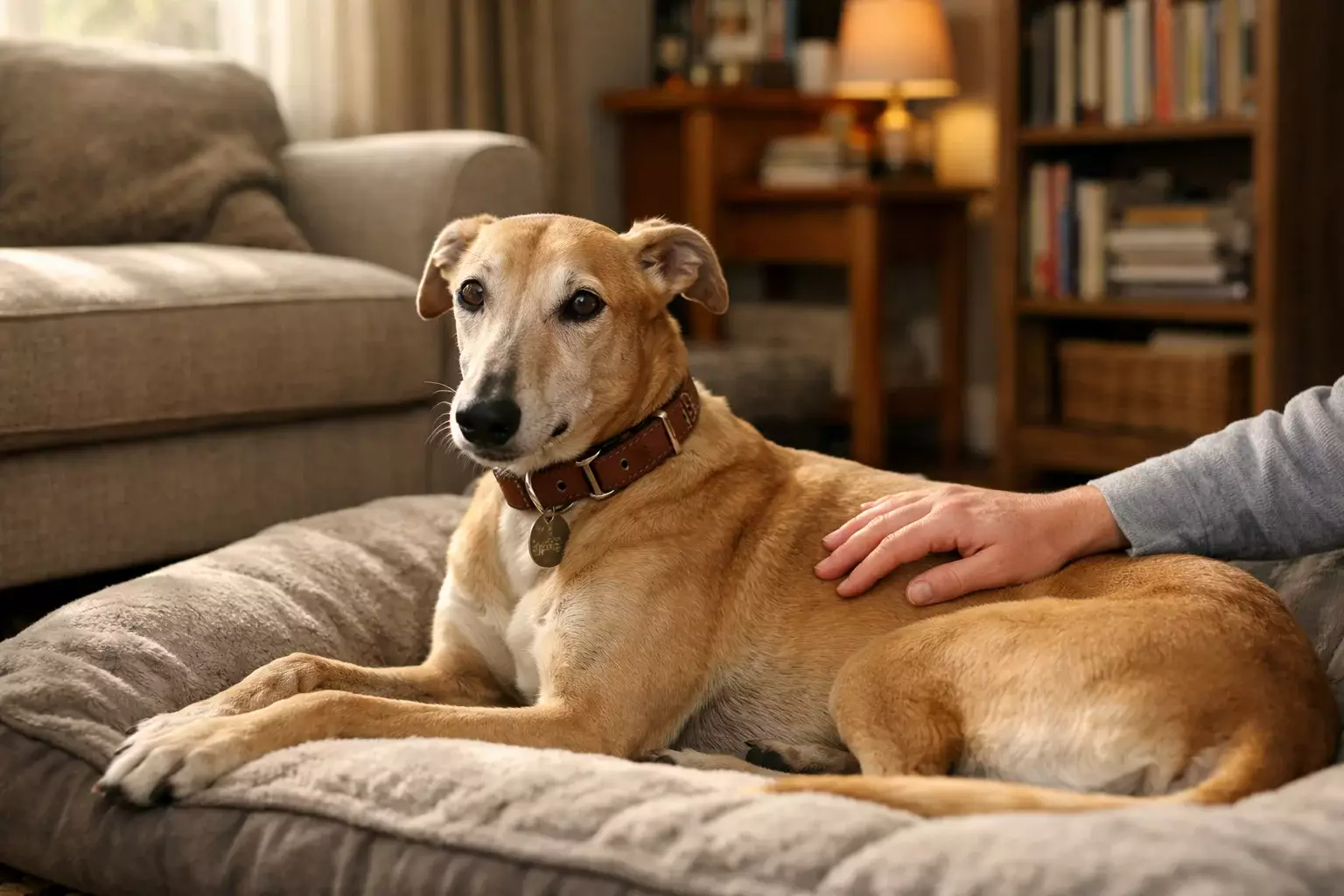
What Happens After the Last Race
A racing greyhound’s career is short. Most dogs compete for two to three years before their times slow, their grading drops, or injury forces them off the track. What happens next — the transition from athlete to pet — is the question that defines how the public perceives greyhound racing more than any result, record, or prize fund ever will. At Monmore Green and every other GBGB-licensed track, that transition is now managed through a formal retirement framework that did not exist in its current form a decade ago.
The Greyhound Retirement Scheme is the structural mechanism that connects a dog’s final race to its next life. It is not a charity drive or a voluntary gesture. It is a funded, regulated programme with financial instruments attached — a bond paid for each retiring dog, a network of approved homing centres, and a data trail that tracks outcomes. Understanding how the scheme works matters for anyone who follows Monmore results with an interest that extends beyond the stopwatch, because the retirement pathway shapes trainer behaviour, kennel management, and ultimately the composition of the racecard itself.
The system is not perfect. Critics argue that it addresses symptoms rather than root causes, and that the very existence of a retirement problem is an indictment of an industry that breeds animals for commercial purposes. Supporters counter that the scheme has transformed outcomes for thousands of dogs and that the data supports the claim. Both positions are held with conviction. What follows is how the scheme actually works.
How the Retirement Scheme Works: The £420 Bond
The Greyhound Retirement Scheme operates through a financial bond attached to each greyhound that enters an approved homing centre upon retirement. The bond is currently set at £420, raised from £400 in 2025. The cost is shared between GBGB and the dog’s registered owner, which means that the financial responsibility for retirement is split between the governing body and the individual who profited from the dog’s racing career.
The bond serves a dual purpose. For the homing centre receiving the dog, it provides guaranteed income to cover the initial costs of assessment, kennelling, veterinary checks, and behavioural evaluation. Rehoming a greyhound is not as simple as handing it to the first interested family. These are animals that have spent their lives in a kennel and training environment, and many need a period of adjustment — sometimes weeks, sometimes months — before they are ready for a domestic setting. The bond helps fund that transition.
For the owner, the bond creates a financial incentive to route the dog through the formal retirement system rather than disposing of it privately. Before the scheme existed, the retirement pathway was unregulated. Dogs could be passed from hand to hand, euthanised without formal oversight, or simply disappear from the record. The bond does not eliminate those risks entirely, but it establishes a paper trail and a financial mechanism that makes formal retirement the path of least resistance for most owners. The co-payment structure also ensures that owners retain a stake in the outcome — it is not simply GBGB writing a cheque to make the problem go away.
Since its launch in 2020, the Greyhound Retirement Scheme has channelled over £5.6 million to homing centres across the country. That figure represents thousands of individual dogs processed through the system, each with a bond attached, each tracked from racing retirement to rehoming outcome. The money is not trivial — for smaller homing centres operating on tight budgets, the GRS bond is a significant portion of their income.
Greyhound Trust Wolverhampton and Other Partners
The homing network that serves Monmore’s retired greyhounds is centred on the Greyhound Trust, the largest dedicated greyhound rehoming charity in the UK. The Trust operates regional branches, and the Wolverhampton and West Midlands branches are the primary partners for dogs retiring from Monmore Green. Other approved rehoming organisations also participate in the scheme, creating a network of options depending on the dog’s location, temperament, and specific needs.
A dog entering a homing centre goes through a structured process. Veterinary assessment comes first — a full health check that identifies any conditions requiring treatment before the dog can be placed with a family. Behavioural assessment follows, determining how the dog interacts with people, other dogs, cats, and the domestic environment. Some greyhounds transition smoothly. Others need extended socialisation, particularly dogs that have spent their entire lives in kennel environments with limited exposure to household stimuli like stairs, televisions, or children.
The Greyhound Trust and its partner organisations also manage the matching process, pairing dogs with suitable adopters based on lifestyle, living space, and experience with the breed. This is not a first-come-first-served system. The centres take responsibility for the placement, which means that a dog returned after a failed adoption is taken back and re-evaluated rather than abandoned to an uncertain fate. That safety net is part of what makes the approved homing centre system more robust than informal private rehoming.
For prospective adopters in the Wolverhampton area, the Monmore connection is direct. Dogs that raced at the stadium last month might be available for adoption within weeks of their final run. The adopter is, in a literal sense, taking home a dog whose results they could have watched on SIS or checked online the previous week. That proximity between the racing product and the retirement outcome is one of the more unusual aspects of greyhound ownership as a pet.
Monmore’s Retirement Record and Local Partnerships
Monmore Green, as an Entain-owned track operating under GBGB regulation, participates fully in the Greyhound Retirement Scheme. Dogs retiring from the track are processed through the formal system, with the bond payment triggered and the homing centre pathway activated. The track’s position in the West Midlands — a region with an established network of rehoming organisations and a large population of potential adopters — works in its favour. Urban areas produce more adoptive homes than rural ones, and Wolverhampton’s metropolitan reach extends the catchment for Monmore retirees.
The retirement data at track level is not published with the same granularity as the national GBGB figures, but the national trend provides context. In 2024, 94% of greyhounds leaving the regulated racing population were successfully retired. Only three dogs across the entire GBGB system were euthanised for economic reasons, down from 175 in 2018. Those national figures reflect the aggregate of outcomes at all licensed tracks, including Monmore, and the direction of travel is unambiguous.
For anyone reading Monmore results regularly, the retirement framework is the invisible backend of the sport. When a dog disappears from the racecard and does not reappear — no more results, no more form entries — the most likely explanation is retirement rather than anything more dramatic. The dog has been assessed, processed through the GRS, and placed with a homing centre or retained by its owner. The result line ends, but the dog’s life continues, and the system that manages that transition is the most substantially reformed element of British greyhound racing in the past decade. Whether that reform is sufficient depends on who you ask, but the mechanism itself — the bond, the centres, the data — is real, funded, and operational at Monmore and every other GBGB track.