
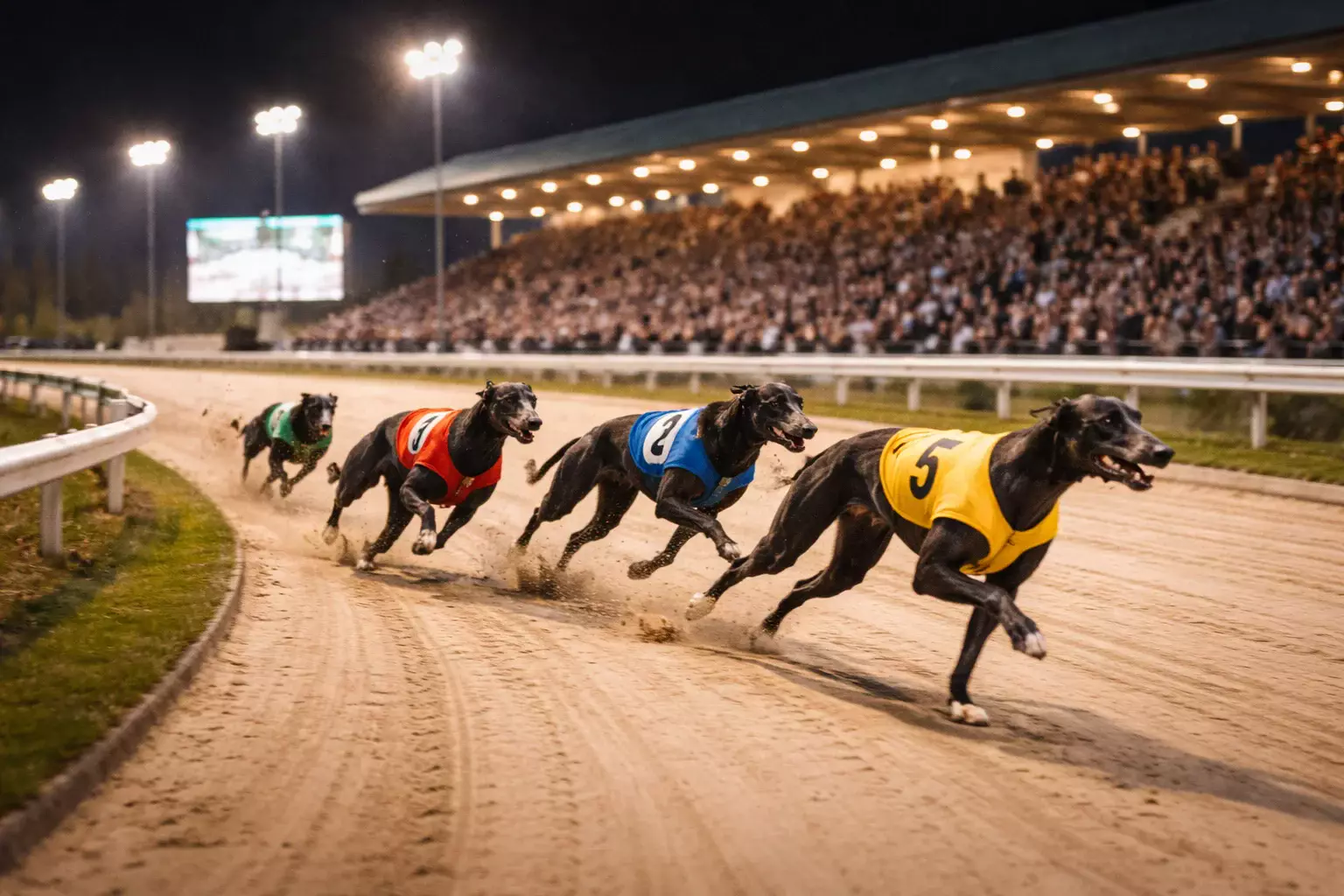
Greyhound Racing Is Not Just a British Thing
If you follow Monmore greyhound results from a British perspective, it is easy to assume the sport is a local affair — a niche betting product that exists in betting shops and at a handful of stadiums across England. The reality is that greyhound racing operates on a global scale, with distinct industries in Australia, Ireland, New Zealand, and the remnants of what was once a major American sector. The British industry is part of a wider ecosystem, and what happens in that ecosystem — bans, contractions, regulatory shifts — has implications for the UK even when the events occur on the other side of the world.
Understanding the global context does not change how you read a Monmore result. It does change how you understand the forces shaping the sport’s future, and those forces are converging in ways that will affect every remaining UK track within the next decade.
Australia: 70% of the World’s Greyhound Betting
Australia dominates world greyhound racing in a way that no other country comes close to matching. The Australian industry generated approximately $5.36 billion in betting turnover in 2024, accounting for roughly 70% of the global total. That figure dwarfs the UK’s £794 million and makes Australia the financial centre of gravity for the sport worldwide.
The Australian model is fundamentally different from the British one. Australian greyhound racing operates across multiple states, each with its own regulatory body, and the betting market is dominated by corporate bookmakers and totalisator pools that are larger and more liquid than anything in the UK. The scale of the Australian industry means that it generates more data, more prize money, and more political controversy than any other jurisdiction.
The controversy matters. In 2016, the New South Wales government briefly banned greyhound racing following a damning special commission report that exposed widespread live-baiting, wastage of dogs, and systemic welfare failures. The ban was reversed before it took effect, following intense lobbying and concerns about job losses, but the political shock reverberated across the global industry and demonstrated that even the most commercially successful greyhound racing jurisdiction was not immune to abolitionist pressure. Since then, Australian turnover has declined by 15% from its 2022 peak, suggesting that the industry’s financial dominance may have begun to erode even without further bans. The decline tracks a broader pattern of increased regulation, reduced racing schedules in some states, and growing public scepticism about the sport’s welfare credentials.
For the UK, Australia serves as both a model and a warning. The model is commercial — how to build a betting product around greyhound racing that generates significant revenue. The warning is political — that commercial success does not provide permanent protection against welfare-driven regulation.
Ireland, New Zealand and the US: Three Different Trajectories
Ireland operates approximately 17 greyhound tracks and has a cultural attachment to the sport that exceeds even Britain’s. The Irish Greyhound Board, known as Rásaíocht Con Éireann, regulates the industry, and the sport benefits from state funding through a statutory levy that the UK industry envies and cites as a model for what could be achieved if Westminster legislated similarly. Irish greyhound racing produces some of the highest-quality dogs in the world, and the transfer market between Ireland and Britain is active — dogs trained in Ireland regularly appear in UK competitions, including at Monmore during major events. The Irish model demonstrates that a well-funded regulatory framework can sustain a greyhound racing industry, though Ireland faces its own welfare debates and is not immune to the abolitionist pressures building across the sport globally.
New Zealand took the opposite path. In 2024, the New Zealand parliament passed legislation banning greyhound racing, with a phased closure running to July 2026 to allow for the redistribution of approximately 2,900 racing dogs. The NZ ban followed years of welfare concerns, investigative journalism, and political campaigning that closely mirror the dynamics now playing out in Wales and, to a lesser extent, in Scotland. The New Zealand model is the most recent completed example of a democratic country moving from criticism to prohibition, and it provides a reference point for UK campaigners arguing that a ban is both practical and precedented.
The United States once had a substantial greyhound racing industry, with dozens of tracks across Florida, Arizona, West Virginia, and other states. That industry has largely collapsed. Florida, the sport’s American heartland, banned greyhound racing through a 2018 constitutional amendment that passed with 69% of the vote, and most other states have followed or allowed their tracks to close through commercial attrition. By 2026, commercial greyhound racing in the US is confined to a handful of venues operating under increasingly restrictive conditions. The US experience demonstrates that an industry can decline to the point of irrelevance without a single national ban — track-by-track closures, state-by-state legislation, and declining consumer interest can achieve the same result over a longer timescale.
Where the UK Sits in the Global Landscape
Britain’s greyhound racing industry occupies a peculiar position in the global picture. It is neither the largest (Australia), nor the most culturally embedded (Ireland), nor the most recently banned (New Zealand), nor the most comprehensively collapsed (the US). It is a medium-sized industry in a medium-sized jurisdiction, facing the same welfare pressures as every other greyhound racing nation but responding with a distinctive combination of self-regulation, voluntary funding, and incremental reform that has produced record-low injury rates without resolving the fundamental political and financial vulnerabilities.
The UK’s 18 tracks produce a steady stream of results — Monmore alone races six days a week — and the BAGS model ensures that the betting product remains commercially relevant even as live attendance declines. But the global trend is unmistakable: the number of countries where greyhound racing operates is shrinking, and the political will to regulate or ban the sport is growing. A spokesperson for the Cut the Chase coalition captured the welfare movement’s perspective by noting that each and every life matters, and that the cumulative toll of trackside fatalities since 2018 is unacceptable regardless of the improvements in annual rates.
For Monmore and the rest of the UK industry, the global landscape provides context rather than immediate threat. No ban is imminent in England. The BAGS contracts keep the tracks running, SIS keeps the cameras rolling, and the results keep appearing on bookmaker screens. But the direction of travel — in Australia, New Zealand, the US, Wales, and Scotland — is towards contraction, restriction, and in some cases elimination. British greyhound racing’s challenge in 2026 and beyond is to demonstrate that it can exist sustainably within that global current rather than being carried away by it.