
The Golden Jacket: Monmore’s Biggest Stayer Test
Every greyhound track has its signature event, the one race that makes the calendar feel like it has a peak rather than a flat line. At Monmore Green, that race is the Golden Jacket. Run over 684 metres — four bends, a full circuit and then some — it is the stayer competition that defines the track’s competitive identity and draws entries from beyond the West Midlands.
The Golden Jacket matters for several reasons, and not all of them are obvious from the result line. At the most basic level, it is one of Monmore’s Category One events, carrying the highest classification available at track level. The prize money sits well above standard graded racing, and the prestige attracts trainers who might otherwise keep their top stayers for competitions at larger venues. But the Golden Jacket also matters as a data point. The heats, semi-finals and final produce a concentrated burst of high-quality 684 m results over consecutive weeks, and those results reveal which dogs can sustain speed over a distance that exposes weaknesses a 480 m race might hide.
In a sport where the total UK prize fund reaches approximately £15.7 million and the biggest single payout — the Greyhound Derby — is worth £175,000, the Golden Jacket is not chasing national headlines. It is chasing something more useful for Monmore regulars: a reliable annual benchmark for the track’s staying division, run on their circuit, under their conditions, with dogs they know.
Race Format: Heats, Semis and Final Over 684 m
The Golden Jacket follows the standard multi-round format used by most major UK greyhound competitions. The journey from first heat to final typically spans three to four weeks, with rounds held on Monmore’s Thursday or Saturday evening cards — the flagship slots where the track puts on its best show.
First-round heats are divided into groups of six dogs, each racing the 684 m trip. The first two finishers in each heat advance automatically, with the fastest losers filling remaining semi-final places. This elimination structure means that every heat is genuinely pressured. There is no coasting into the next round. A dog needs to either win or finish close enough to qualify on time, which tends to produce aggressive, front-running tactics from the traps.
Semi-finals follow the same principle: six dogs per race, the top finishers advancing to the final. By this stage the field has been filtered to the strongest dozen or so stayers in the region, and the quality of racing rises noticeably. Semi-final times at the Golden Jacket often match or beat the best 684 m times recorded at Monmore in standard graded racing during the entire year, because the dogs are racing for survival rather than routine points.
The final itself is a single race of six dogs, run on a Saturday evening to maximise the trackside crowd and the betting interest. The winner takes home £20,000 — a prize that places the Golden Jacket among Monmore’s most lucrative events and reflects its Category One status. The winner also earns a proven record of performing over the demanding 684 m trip that will follow the dog through the rest of its career. Premier Greyhound Racing, the joint venture between Entain and Arena Racing Company, channels over £2.5 million into open racing across the tracks it controls, and the Golden Jacket is one of the flagship events that investment supports.
Golden Jacket History: From 1975 to Monmore’s Modern Revival
The Golden Jacket was inaugurated in 1975 at Harringay Stadium, making it one of the sport’s established staying classics. After Harringay closed in 1984, the competition moved briefly to Hall Green Stadium and then to Monmore Green for a single edition in 1986. From 1987 it settled at Crayford Stadium, where it remained for nearly four decades until Crayford’s closure in 2024. That closure brought the Golden Jacket back to Monmore in 2025 — a return that gave the Wolverhampton track one of its most prestigious annual fixtures for the first time since the mid-1980s.
The roll of Golden Jacket winners across its various homes is a compact history of staying talent in British greyhound racing. The competition has consistently attracted dogs that combine pace with stamina — the staying distance requires both. A pure sprinter will not last the trip. A plodding stayer will not break fast enough to avoid trouble on the first bend. The winners tend to be versatile dogs, capable of leading from the traps or settling and finishing strongly, and that versatility is what makes Golden Jacket form so useful for analysts trying to assess a dog’s ceiling.
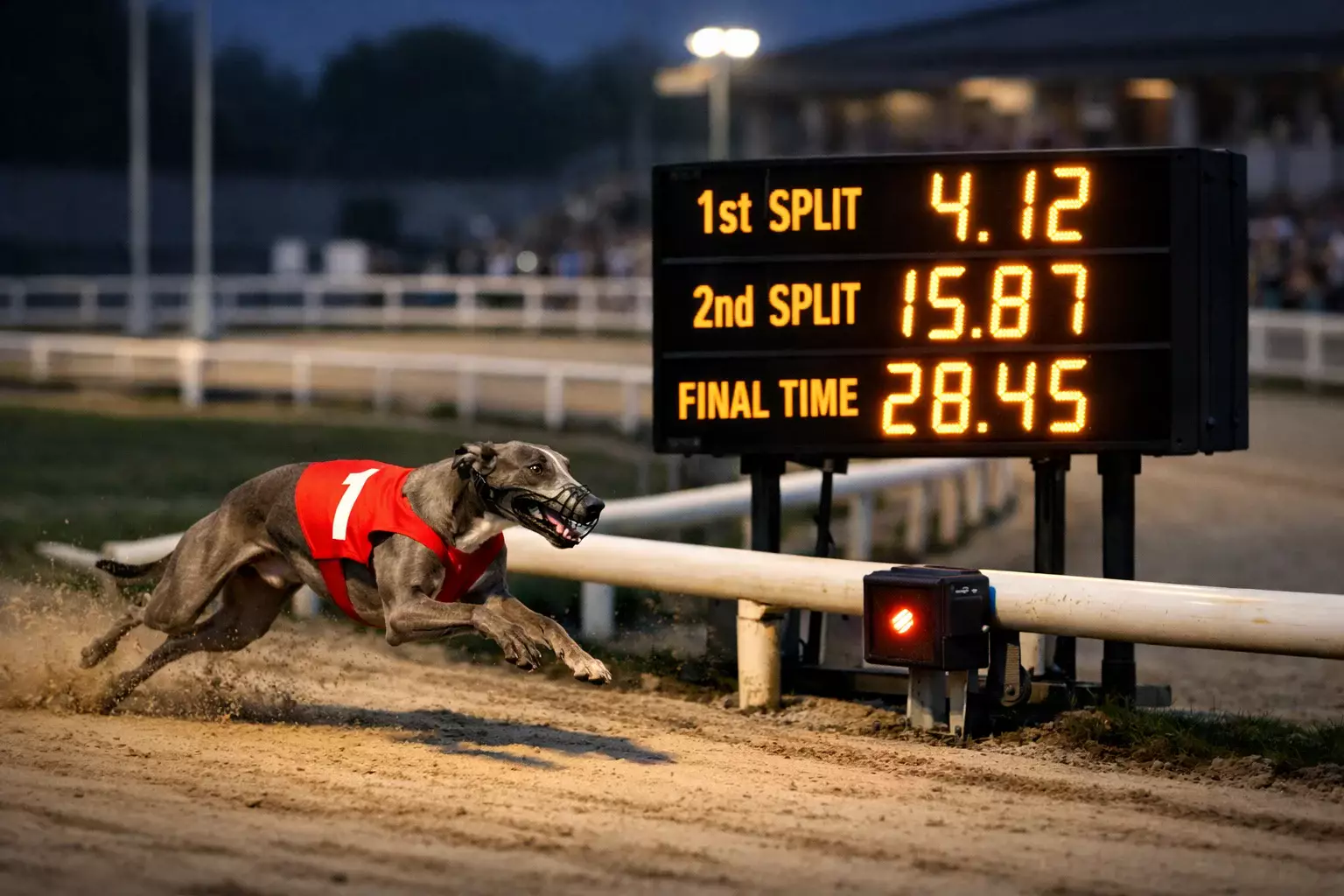
The revival at Monmore has already produced exceptional racing. Mongys Wild, trained by Mark Wallis, won the first Monmore-hosted Golden Jacket since 1986 with a new 684 m track record of 40.54 seconds in the 2025 semi-finals — a time that immediately set the benchmark for the venue’s staying division. The competition has shifted from 714 m at Crayford to 684 m at Monmore, reflecting the different circuit geometry, but the principle remains the same: which dog can sustain speed the longest.
The track itself underwent a significant redesign in 1996, which means that pre-1996 times at Monmore are not directly comparable to modern results. The circuit dimensions changed, the surface was relaid, and the running rail configuration was altered. For historical comparison purposes, the post-1996 era is the relevant baseline, and within that window, the Golden Jacket’s return has given Monmore regulars a new annual touchstone.
Recent Winners and Standout Performances
The Golden Jacket’s return to Monmore has been defined by one dog: Mongys Wild. Trained by Mark Wallis and owned by the MWD Partnership, the October 2022 son of Roxholme Olaf won the 2025 final with a track record and then successfully defended his title in 2026, beating Droopys Flare by a short head in 40.54 seconds in a final that drew a large Monmore crowd. The back-to-back wins placed Mongys Wild alongside Bobs Regan (1991–92), Wexford Minx (1994–95) and Bellmore Sally (2022–23) as the only dogs to achieve consecutive Golden Jacket victories. A six-time Category One winner, Mongys Wild also holds the St Leger and Arc Cesarewitch titles — credentials that underline the calibre of staying talent the Golden Jacket now attracts to Monmore.
For punters, the Golden Jacket final is one of the most analytically interesting races on the Monmore calendar. The heat and semi-final results provide a direct comparison between all finalists on the same track, over the same distance, within a window of two or three weeks. That controlled data set is rare in greyhound racing, where most form comparisons involve different tracks, different distances, or different conditions. In the Golden Jacket, you can watch a dog run 684 m at Monmore in the heats, compare it directly to the dog it will face in the final, and make a judgement based on times, running lines, and sectional data from the same venue.
The outgoing GBGB chairman Jeremy Cooper noted before stepping down that racing greyhounds are now receiving the highest levels of care and protection the sport has ever known. That welfare infrastructure underpins competitions like the Golden Jacket, where dogs race multiple rounds over consecutive weeks and the risk of injury accumulates with each outing. The fact that the competition continues to attract strong fields suggests that trainers are confident the welfare framework supports the demands of a multi-round stayer event.
Whether you follow the Golden Jacket as a betting event, a form reference, or simply an annual highlight at a venue you visit regularly, the competition earns its place on the Monmore calendar. It is the race that asks the hardest question a track can ask — which dog can sustain speed the longest — and the answer, delivered in roughly 41 seconds of racing, is always worth reading.