
Where to Find Monmore Odds and What They Tell You
Odds are the market’s opinion expressed as a number. When you see a Monmore greyhound listed at 3/1, you are looking at a compressed summary of what the bookmaker — or the exchange — believes about that dog’s chances. Finding those odds, understanding how they are formed, and knowing when to act on them is a distinct skill from reading form. Form tells you what should happen. Odds tell you what the market thinks will happen. The gap between the two is where the money is made or lost.
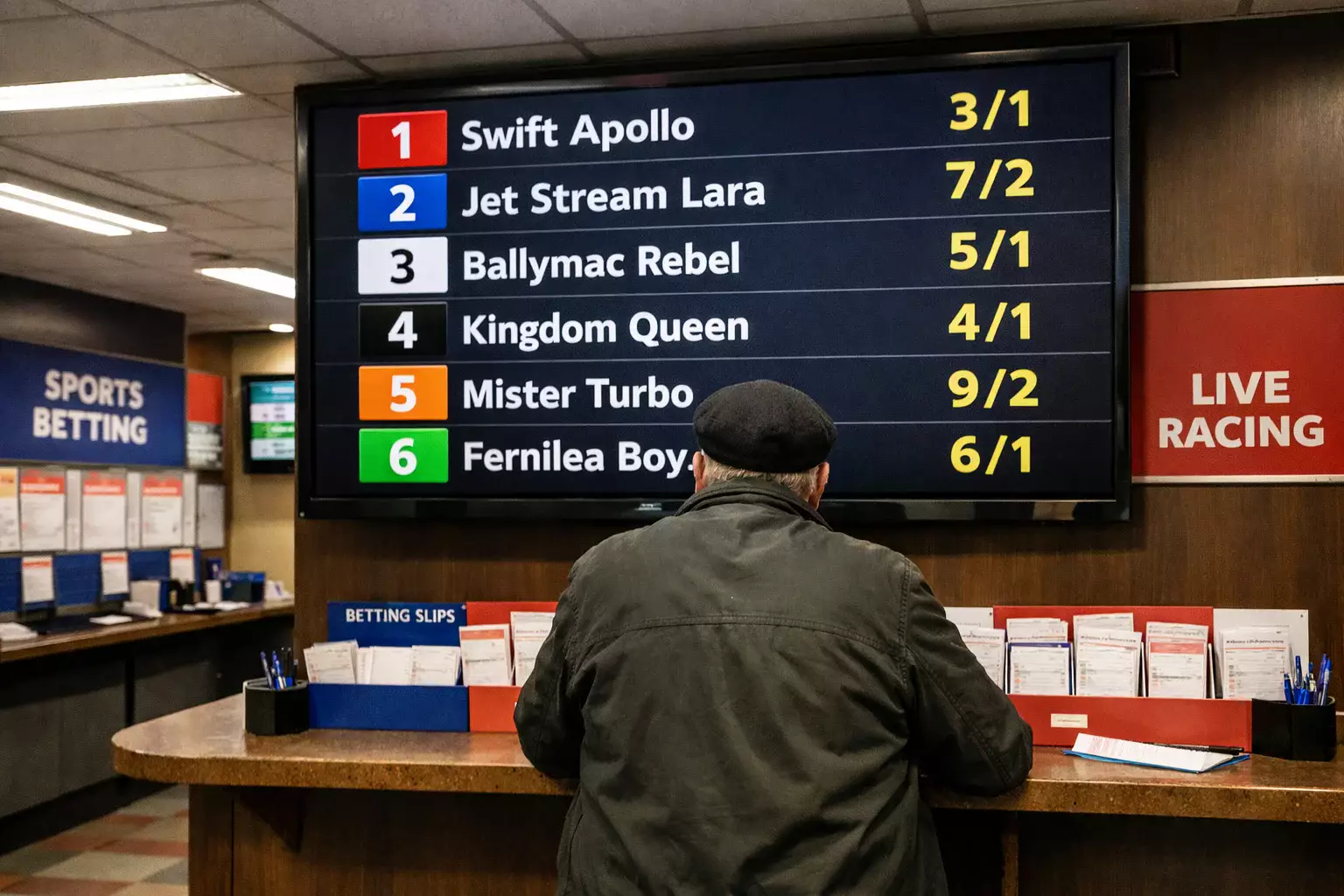
Monmore odds are available from multiple sources, each with a different pricing structure and a different timing. The on-course bookmakers set the starting price at the track. Online bookmakers publish early prices hours before the first race. The Betfair exchange offers a peer-to-peer market where odds are set by bettors rather than bookmakers. And comparison sites aggregate prices across operators so you can see where the best value lies. Knowing which source to use, and when, is the first step towards betting on Monmore with purpose rather than impulse.
Oddschecker, Betfair Exchange and Bookmaker Sites
Oddschecker is the default starting point for most UK punters comparing greyhound odds. The site aggregates prices from the major bookmakers and displays them side by side, so you can see at a glance whether a dog is 3/1 with Ladbrokes, 7/2 with Coral, or 4/1 with William Hill. The differences may look small, but over hundreds of bets they compound significantly. Consistently taking the best available price — known as best odds guaranteed, or simply shopping around — is the single easiest improvement a punter can make to their long-term returns. A study of any extended betting record will show that punters who habitually take the best price available outperform those who stick with a single bookmaker, by a margin that often exceeds the difference between a winning and losing year.
Betfair Exchange operates on a different model. There is no bookmaker setting the price. Instead, bettors offer and accept odds from each other, and the exchange takes a commission on winning bets. Exchange odds for greyhound racing tend to be more generous than bookmaker odds for outsiders and less generous for favourites, because the market is thinner and less efficiently priced. For Monmore races, exchange liquidity varies — a Saturday evening open race will attract more exchange money than a Tuesday BAGS D4, and the pricing will be sharper as a result.
Individual bookmaker sites — Ladbrokes, Coral, Betfred, Paddy Power, and others — offer their own proprietary odds, often published as early prices on the morning of a BAGS meeting. The independent on-course bookmaker Star Sports, which has expanded aggressively into digital, noted through its head of operations Flynn Goward that the firm was standing at approximately 150 days of racing per year across horse and greyhound events — a signal of the growing retail-to-digital transition in how odds reach the customer.
How Greyhound Odds Are Set and Why They Move
Greyhound odds begin with a tissue — a preliminary set of prices that a bookmaker’s compiler produces based on form, grade, trap draw, and their assessment of likely betting patterns. The tissue is the opening offer, and it is published either in-shop or online as the early price. From that point, the odds move in response to money. If punters back a particular dog heavily, the bookmaker shortens its price to reduce liability. If a dog attracts no interest, its price drifts.
In greyhound racing, where the markets are significantly thinner than horse racing, individual bets can cause disproportionate price movements. A single £500 bet on a 4/1 shot in a BAGS race might be enough to move the price to 3/1. This volatility creates opportunities for punters who can identify when a price movement is driven by informed money — a trainer’s connection backing a dog they know is ready to run well — versus uninformed money from someone who liked the name.
The overall market for greyhound betting has contracted. UK betting shop turnover on greyhounds reached £794 million in the year to March 2024, but the real-terms decline of 23% over three years means the pool of money forming prices is smaller than it was. Smaller pools mean less efficient pricing, which means more frequent mispricings — and mispricings are exactly what value bettors look for. The contraction hurts the industry overall, but for the analytical punter it creates a counter-intuitive opportunity: the thinner the market, the greater the chance that your assessment differs from the crowd’s.
Early Prices vs Starting Prices: Timing Your Bet
The timing of your bet determines the price you get, and at Monmore the choice is between early prices and the starting price. Early prices are published by bookmakers in the morning, typically several hours before a BAGS meeting. They are compiled from form data and the bookmaker’s model, and they are fixed — if you take an early price of 4/1 and the dog shortens to 2/1 by the off, you still get paid at 4/1.
The starting price is the odds at the moment the traps open, determined by on-course bookmakers at the track. If you bet at SP, you accept whatever the market returns when the race starts. The advantage of SP is that you see the final market assessment before the result. The disadvantage is that if you spotted value at 4/1 in the morning and the dog drifts to 7/2 by the off, you get the inferior price.
The practical question is whether early prices or SP offer better value over time. The answer depends on your skill. If you are good at identifying dogs whose form the market has not yet priced correctly, early prices lock in value before the market corrects. If you prefer to wait and see how the market shapes up — who is being backed, who is drifting — then SP gives you the benefit of that information at the cost of potentially worse odds on the dogs you want.
For Monmore specifically, early prices on BAGS meetings are often available from 8:00 or 9:00 AM, giving form students a window of several hours to compare their own assessment with the bookmaker’s opening offer. That window is the analytical playground, and the best greyhound punters use it methodically: read the form, build a view, check the early price, and act if the price exceeds their estimate of the dog’s true chance. For evening meetings, early prices may appear in the afternoon, compressing the window but not eliminating it. The discipline is the same regardless of the meeting type — form first, price second, and the courage to wait when neither aligns.