
Getting to Monmore Green: The Practical Essentials
If you have been reading Monmore greyhound results on a screen and decided it is time to see the real thing, you need three pieces of information: where the stadium is, when it opens, and what it costs. Everything else — the atmosphere, the food, the betting — takes care of itself once you are through the door. Monmore Green Stadium has occupied the same site since 11 January 1928, when 10,000 spectators attended the first meeting, and while the surroundings have changed considerably over nearly a century, the basics of a track visit remain refreshingly simple.
This is a practical guide to visiting Monmore, not a sales pitch. The stadium is a working greyhound venue with functional facilities, not a destination resort. If you set your expectations accordingly — an evening out with live racing, a few bets, and a meal if you want one — the experience delivers exactly what it promises. If you are expecting chrome and glass, recalibrate before you arrive.
Address, Directions and Parking
Monmore Green Stadium sits on Sutherland Avenue in the Bilston area of Wolverhampton, postcode WV2 2JJ. The location is industrial rather than scenic — warehouses and light-industrial units line the approach roads — but it is well connected to the major transport routes that serve the West Midlands. From the M6, Junction 10 puts you on the A454 towards Wolverhampton city centre, and the stadium is a short diversion south of the main road. From the Black Country route, the A41 and A4039 provide alternative approaches. Satnav to the postcode is reliable; the stadium is visible from the road and signed on the approach.
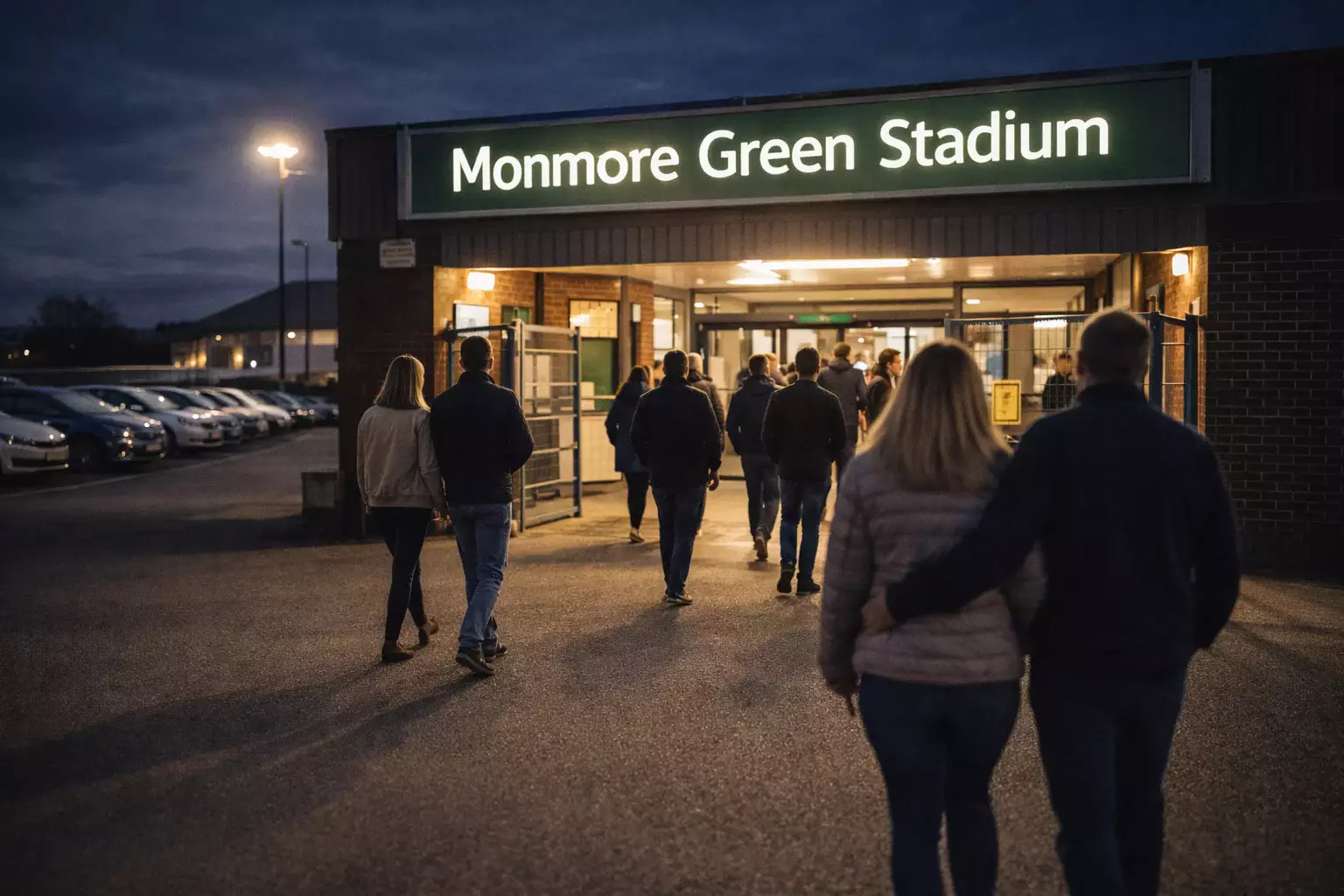
Parking is one of Monmore’s practical strengths. The stadium has approximately 400 car parking spaces on site, which is sufficient for even the busiest evening meetings. Parking is free on most race nights, though this can vary for special events or competition finals when attendance peaks. The car park is tarmacked, reasonably well lit, and adjacent to the main entrance — you are not walking half a mile from an overflow field.
For visitors arriving by public transport, Wolverhampton railway station is the nearest mainline stop, approximately three miles from the stadium. A taxi from the station takes ten minutes outside rush hour and should not cost more than a standard local fare. Bus routes serve the Bilston area, though the connections are not designed with evening race-goers in mind, and the last services may not align with the finish of a Saturday night card. If you are relying on buses, check the schedule before you go and have a taxi number saved as a backup. Driving remains the realistic option for most visitors, and the free parking removes the cost barrier that deters some people from stadium visits elsewhere.
Restaurant, Bars and Trackside Viewing
The stadium’s spectator capacity is 1,150, and the facilities are geared towards that scale. The main grandstand is covered, providing shelter from the rain that Wolverhampton delivers with reliable frequency, and offers a clear view of the track from the first bend through to the finish line. Trackside viewing is also available at ground level, where you can stand against the rail and watch the dogs pass within metres — a visceral experience that no screen can replicate.
The Dogtastic restaurant overlooks the track from the first floor of the grandstand and offers a sit-down dining experience with a view of the racing. Tables are typically booked in advance for evening meetings, particularly on Saturdays and during competition finals when the card attracts its largest audiences. The menu is straightforward — pub-style food, nothing elaborate — and the appeal is the combination of a meal with live entertainment rather than any culinary ambition. Booking ahead is recommended; walk-in availability cannot be guaranteed on popular nights. For a more casual approach, the ground-floor bars serve drinks and snacks, and there are food outlets offering takeaway options that you can eat trackside.
The tote windows and on-course bookmakers are located in the main concourse area, accessible from both the grandstand and the ground-level viewing positions. The on-course bookmakers take cash bets and display their odds on boards — a traditional setup that has been part of greyhound racing since long before online betting existed. For visitors used to placing bets on their phones, the on-course bookmakers offer a different experience: a face-to-face transaction where you can negotiate odds, take a price, or simply ask which dog the bookmaker fancies. It is one of the few remaining live betting environments in British sport.
Admission, Free BAGS Days and Corporate Packages
Admission to Monmore varies by meeting type. Evening meetings on Thursdays and Saturdays carry an entry charge — typically a modest fee that reflects the event nature of the card. The exact price can fluctuate for competition finals or special events, so checking the track’s website or social media before you go is advisable.
BAGS meetings during the week — the Monday, Tuesday, Wednesday, and Friday daytime cards — are a different proposition. These meetings are primarily broadcast for betting shop consumption and do not expect or cater for a significant live audience. Some BAGS meetings are free to attend, which makes them an ideal introduction for first-time visitors who want to see the track, understand how a meeting runs, and watch a few races without committing to the full evening experience. The dogs are the same, the races are real, and the atmosphere is quieter — more laboratory than theatre.
For groups and corporate bookings, Monmore offers packages that bundle admission with a meal in the restaurant, a racecard, and sometimes a tote voucher or drink. These packages are marketed towards birthday groups, stag and hen parties, and office outings, and they represent the track’s effort to attract occasional visitors who might not otherwise think of greyhound racing as a night out. The packages are functional rather than luxurious, priced competitively, and deliver a reliable evening’s entertainment for groups of any size that the 1,150-capacity stadium can accommodate.
One practical tip: arrive early enough to buy a racecard and study the form before the first race. The racecard is your programme for the evening, listing every dog, its trap, trainer, recent form, and grade. Reading it is half the fun, and the 15 minutes before the first race are when the evening comes into focus. The racecard costs a couple of pounds and is worth every penny if you want to engage with the racing rather than simply watch shapes run past.