
The Corporate Map Behind Your Greyhound Bet
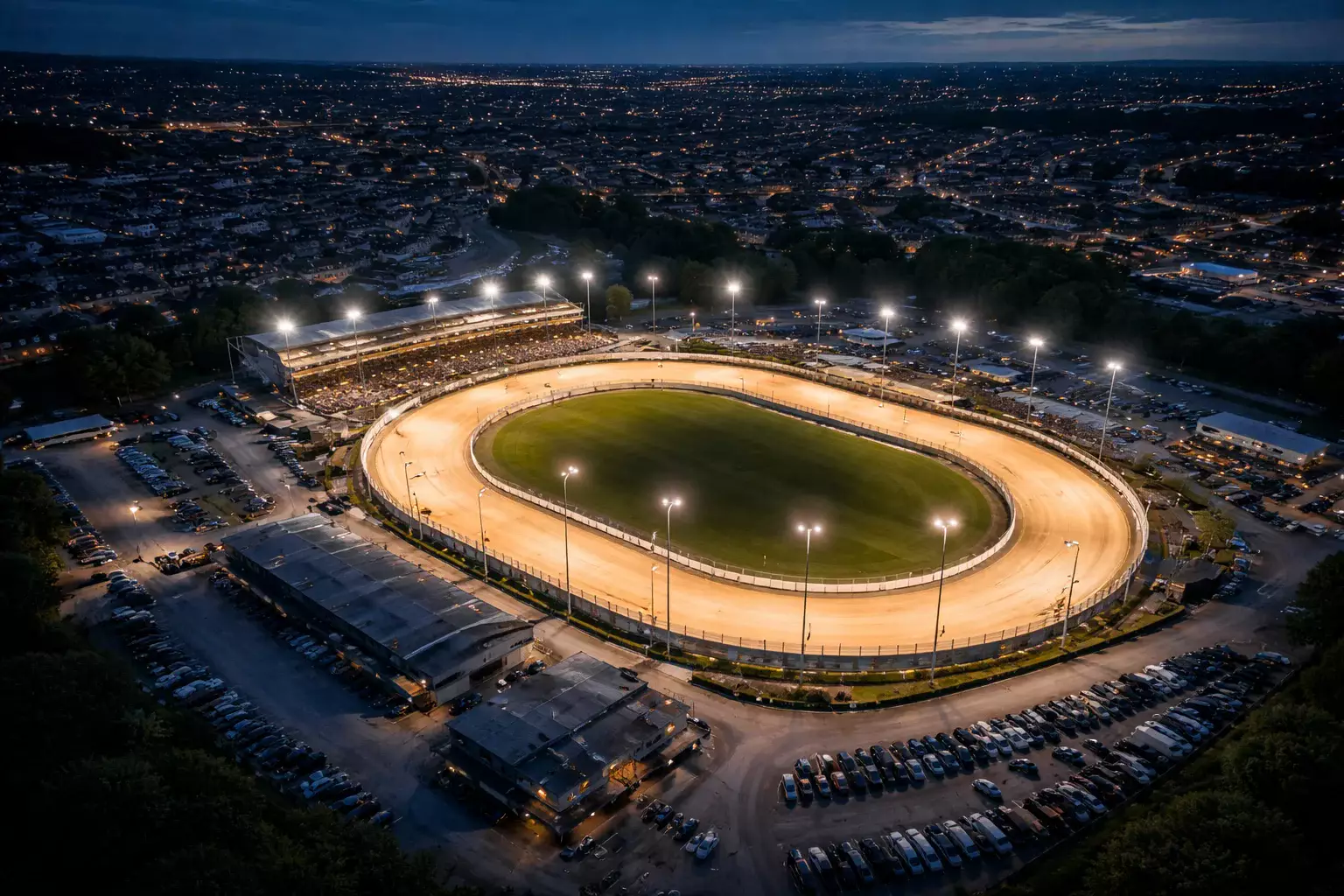
When you look at a Monmore greyhound result, you are looking at the output of a corporate structure that most punters never think about. The track does not operate as an independent venue owned by a local entrepreneur. It belongs to Entain, one of the largest gambling companies in the world, and its media rights are managed through Premier Greyhound Racing, a joint venture between Entain and Arena Racing Company. That corporate architecture determines when Monmore races, what gets broadcast, how much prize money is on offer, and which bookmakers carry the stream.
Understanding who owns the tracks — and how ownership connects to the betting product — is not essential for placing a bet. But it is essential for understanding why Monmore results are available on every major bookmaker’s platform, why the BAGS schedule runs the way it does, and why the sport’s financial model looks the way it does. The corporate map is the invisible layer beneath every racecard, and reading it helps explain the commercial logic that shapes the racing you see. Most punters never look at this layer. Those who do gain a structural understanding of the sport that goes beyond times and trap draws.
Entain and ARC: The Joint Venture That Changed Broadcasting
Entain — formerly known as GVC Holdings and, before that, Ladbrokes Coral — is a FTSE 100 gambling company that operates brands including Ladbrokes, Coral, bwin, and PartyPoker. Its involvement in greyhound racing comes through direct track ownership: Entain owns several stadiums outright, including Monmore Green. Arena Racing Company is Britain’s largest racecourse operator, managing horse racing venues across the country and extending into greyhound media rights through the same infrastructure.
The two companies formed Premier Greyhound Racing as a joint venture to consolidate media rights across their combined portfolio of greyhound tracks. PGR holds the broadcasting and commercial rights for nine of the UK’s licensed greyhound stadiums — roughly half of the active GBGB-regulated venues. The deal signed with major retail betting operators gives PGR control over how those tracks’ racing is distributed to bookmakers, which platforms carry the streams, and how the revenue is shared between tracks, PGR, and the broadcast partner SIS.
The creation of PGR was a pivotal moment for British greyhound racing. Before the joint venture, individual tracks negotiated their own media deals, often from a position of weakness. A single track with a few hundred races a year has limited bargaining power against a bookmaker chain with thousands of shops. PGR aggregated the supply — nine tracks, thousands of races per year — and negotiated as a bloc. The result was better commercial terms for the tracks and a more structured product for the bookmakers.
A PGR representative described the arrangement as underpinning the viability of the service, noting the commitment from retail bookmakers to driving a competitive betting product alongside the highest welfare standards at the tracks involved. That language — viability, commitment, welfare — reflects the corporate framing: PGR positions itself not just as a commercial vehicle but as a mechanism for sustaining the sport through better funding and better standards.
The Nine PGR Tracks and What They Share
The nine stadiums under the PGR umbrella include Monmore Green, along with venues spread across England. These tracks share a common commercial framework: their BAGS and evening fixtures are marketed as a single product to bookmakers, their media rights are managed centrally, and the prize money for open racing is funded partly through PGR’s investment pool — over £2.5 million annually directed towards open-race prize funds across the portfolio.
What the PGR tracks also share is a degree of scheduling coordination. The BAGS calendar is constructed to avoid direct clashes between PGR venues, so that betting shops always have a PGR-sourced race available without two PGR tracks competing for attention in the same time slot. This coordination is invisible to punters but fundamental to the commercial model. It maximises the revenue per race by ensuring that each meeting faces minimal competition from sister tracks within the same corporate family.
The remaining UK tracks outside the PGR structure operate independently or through other commercial arrangements. Some negotiate their own SIS deals. Others work through different aggregators. The result is a two-tier system: PGR tracks benefit from centralised negotiation and coordinated scheduling, while independent tracks negotiate from a smaller base. Monmore, as a PGR venue, sits on the stronger side of that divide, with access to marketing resources, coordinated investment, and a distribution network that independent tracks must build for themselves.
How Ownership Affects Results Coverage, Prize Money and Scheduling
The practical consequences of PGR ownership are visible in three areas. First, results coverage. Monmore’s results appear on every major bookmaker’s platform because PGR’s deal with retail operators ensures distribution. A punter checking Ladbrokes, Coral, William Hill, or Betfred will find Monmore results available within minutes of each race. That ubiquity is not accidental — it is contractual, and it is PGR’s commercial product in action.
Second, prize money. The £2.5 million that PGR directs towards open racing raises the stakes for Monmore’s evening competitions — the Golden Jacket, Winter Derby, and Puppy Derby all benefit from the centrally funded prize pool. Without PGR’s investment, these competitions would carry lower purses, attract weaker fields, and produce results of less analytical value. The funding is not charity; it is a commercial calculation. Better competitions attract more betting interest, more betting interest generates more revenue, and the cycle sustains itself.
Third, scheduling. Monmore’s six-day racing week — BAGS on Monday, Tuesday, Wednesday, and Friday; evenings on Thursday and Saturday — is structured within the PGR framework. The days, the start times, and the number of races per card are all shaped by the commercial agreements between PGR, SIS, and the bookmakers who consume the product. Greyhound betting in UK shops turned over £794 million in the year to March 2024, and every Monmore race that contributes to that figure is slotted into a schedule designed to maximise its commercial return. The schedule is not tradition. It is an output of corporate planning, reviewed and adjusted as market conditions change.
For punters, this is background information rather than actionable analysis. You do not need to understand PGR’s corporate structure to pick a winner. But knowing that the race you are watching exists because of a media rights deal, that the prize money comes from a centrally managed fund, and that the scheduling reflects commercial coordination rather than sporting tradition gives you a clearer picture of what Monmore results actually represent. They are not just race outcomes. They are the output of a broadcasting business, and the business model shapes everything about how they are produced, distributed, and consumed.